
Caring for children often means monitoring their screen time, making sure they stay active, or encouraging them to eat their vegetables. But how can parents ensure that they’re breathing clean air?
Recent studies from University College London found that exposure to common pollutants, particulate matter (also known as PM 2.5) and nitrogen dioxide (NO2), is associated with poorer health outcomes in adolescence, and lower cognition in adults.
“[PM 2.5] is a chemical soup of all the fine particles in the air smaller than 2.5 micrometres,” explains Brian Castellani, a professor of social and public health at Durham University. “These particles come from traffic, wood burning, industry, and the atmospheric breaking down of gases.”
As a smaller particle, PM 2.5 can cross the blood-brain barrier once inhaled. This means it can have a direct effect on the brain and nervous system, leading to a higher risk of mental and cognitive issues – even dementia – in later life.
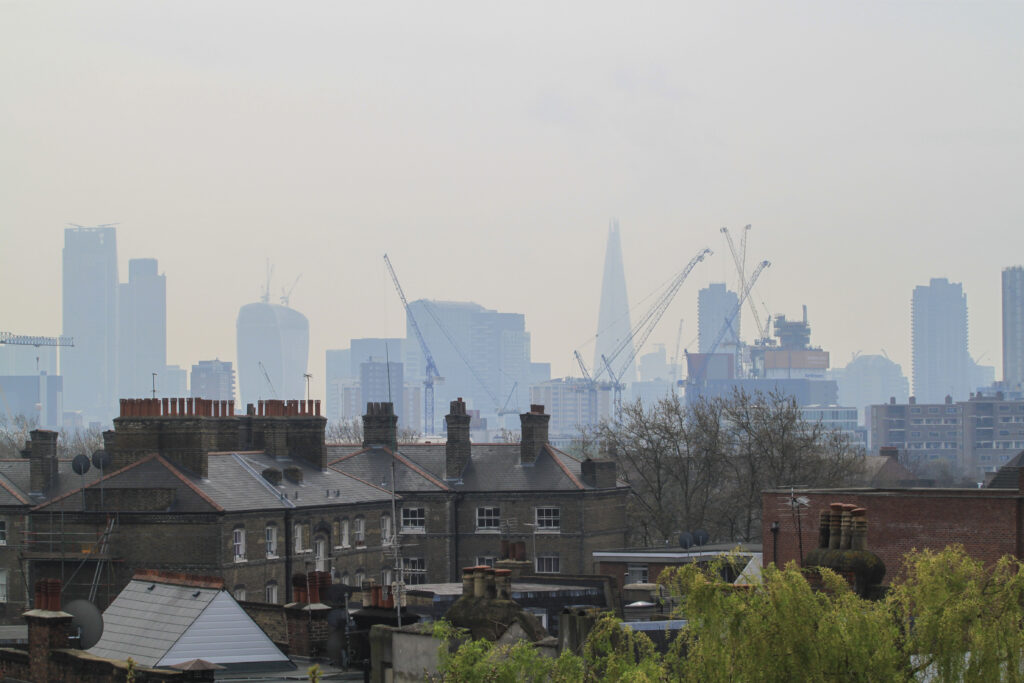
Naturally, parents are now worrying about how this affects children growing up in polluted cities like London.
“I don’t smoke, I try and give my children healthy diets, and all of those things,” says Beth Wan, an NHS physician and mother to two young children. “But air pollution is really worrying because, as an individual, there’s not much you can do. The things that affect air pollution are policy issues.”
Wan has spent the last two years volunteering at Mums For Lungs, a UK-based grassroots campaign group that advocates for cleaner air for everyone, especially children. The organisation works on multiple national campaigns, including Ditch Diesel, which calls for phasing out diesel vehicles in the UK by 2030.
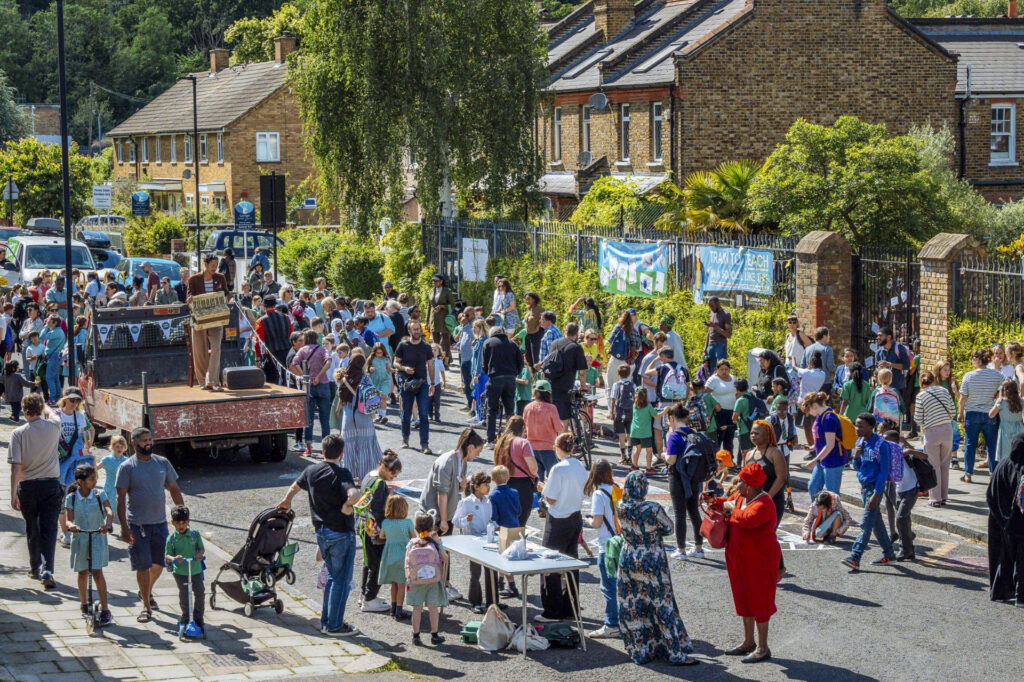
More locally, it pushes for “school streets” – roads closed off to vehicles during school hours – and for children to walk or cycle instead of being driven to school. These initiatives aim to reduce emissions produced by vehicles, including NO2 and PM 2.5. Road transport causes nearly half of London’s air pollution, according to a 2022 report from the World Economic Forum.
In 2023, the Mayor of London Sadiq Khan announced an expansion of Ultra Low Emission Zones (ULEZ). These areas, now operating in all 32 boroughs, charge a fee on vehicles that don’t meet emission standards. Transport for London reports a 27 per cent reduction in harmful concentrations of NO2 since the expansion of ULEZ.
Wan lives in the London borough of Barnet and is a member of the Barnet Mums for Lungs subdivision. The group, she explains, offers an invaluable space to voice her personal concerns. Still, getting anything done locally takes time.
“We’ve been waiting six years for a cycle lane to be put in,” she says.
Dr. Matthew Hobbs, an associate professor in planetary health at Sheffield Hallam University, led a longitudinal study which investigated the pollution risk to children’s cognitive development. The researchers hypothesised that children are “particularly vulnerable” to air pollution because their brains and bodies are still developing.
The study discovered associations between pollutant exposure and impaired cognition, ranging from difficulty concentrating in school to a higher risk of substance abuse later in life.
Even brief exposure to high concentrations of pollutants can have rapid effects. A University of Birmingham study from February found that participants performed more poorly on cognitive tests just four hours after being exposed to PM 2.5.
Given these health risks, it’s no surprise that some parents see climate activism as a parental responsibility.
“After my second daughter was born, I started thinking about the decisions I needed to make to keep my children safe,” says Rowan Ryrie, the co-founder of the Climate Parent Fellowship with Our Kids’ Climate, a non-profit that connects grassroots groups and leaders in a child-focused global climate movement.
Rylie co-founded the fellowship in 2021. The programme funds intergenerational and family-led climate causes, including raising awareness about the environmental impact of coal-fired burners in Poland, and pushing for air purifiers in schools in smog-choked India.
“The parent-led intergenerational message can be so powerful because it does cut across those political left and right boundaries,” Ryrie says. “Concern for future generations – that’s something that you’ll get a lot of agreement on in different political spaces.”
Our Kids’ Climate also runs the Our Kids Air campaign, made up of organisers from seven countries – including South Africa, the US and Ecuador – who demand urgent policy changes and a transition away from fossil fuels.
Castellani says that addressing air pollution must involve “thinking about the practical and everyday barriers and facilitators to change”, ranging from cleaner public transport to greener urban spaces.
“The path forward is clear,” he says. “By continuing to invest in equitable, health-focused interventions, we can build urban environments where clean air is not a privilege, but a shared public good.”