
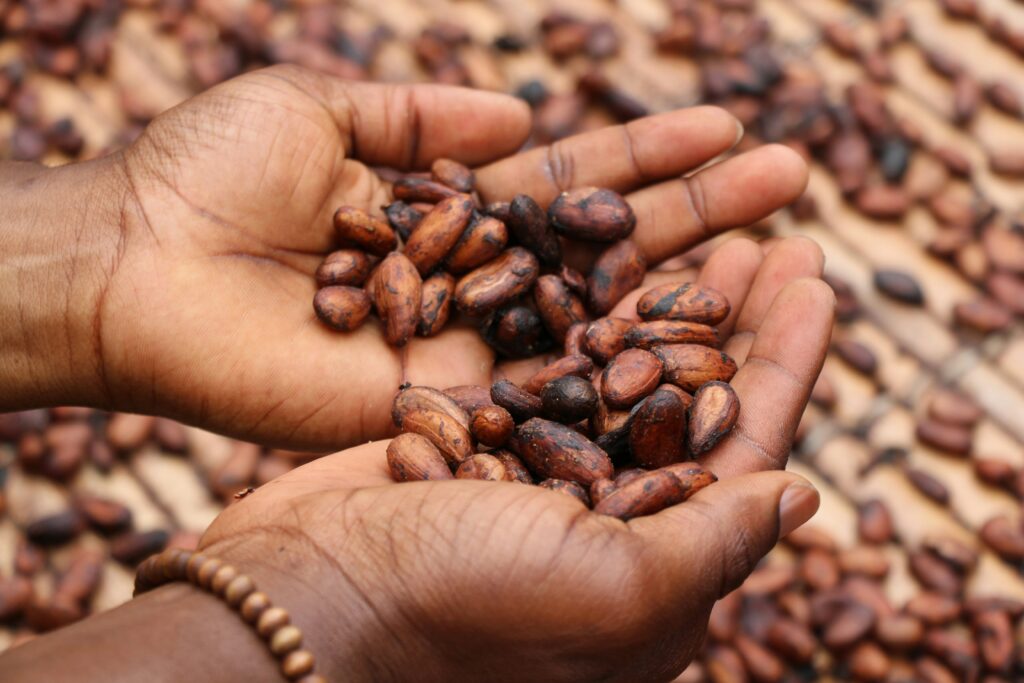
The unstable cocoa market is a bitter discovery for chocolate lovers across Europe, where half (49.1%) of globally exported chocolate products are made. But it is West Africa, which makes up 60% of global cocoa production, that is at the centre of this issue.
The market has faced instability for some time now, but in December 2024, the price of cocoa reached an all-time high. This left those working across the supply chain wondering how their own businesses can tackle the problem.
Pomasi Ismail is the council chairman of Ghana’s Cocoa Abrabopa Association (CAA), an organisation that was set up in 2006 for and by Ghanaian cocoa farmers looking for stability within their profession. A farmer himself in the Ashanti region of Ghana, Ismail speaks of how the climate crisis has affected cocoa farms.
If we don’t restore the environment, there will be a time when we struggle to enjoy our bar of chocolate
Pomasi Ismail
“Months where we have expected the rain to be with us, we don’t get the rain,” he says. “If you want the rain, you will end up getting the sun.”
The impact has been profound. Prolonged droughts, unfamiliar pests, and new diseases are devastating cocoa trees. Labour shortages, driven by better pay in illegal mining operations, simply add to the problem. “It is not easy to even get labour,” Ismail explains. “It is not readily available because illegal minors get paid more than what cocoa farmers are paid. Even if we can get some [labourers] they then charge so much money for their service.”
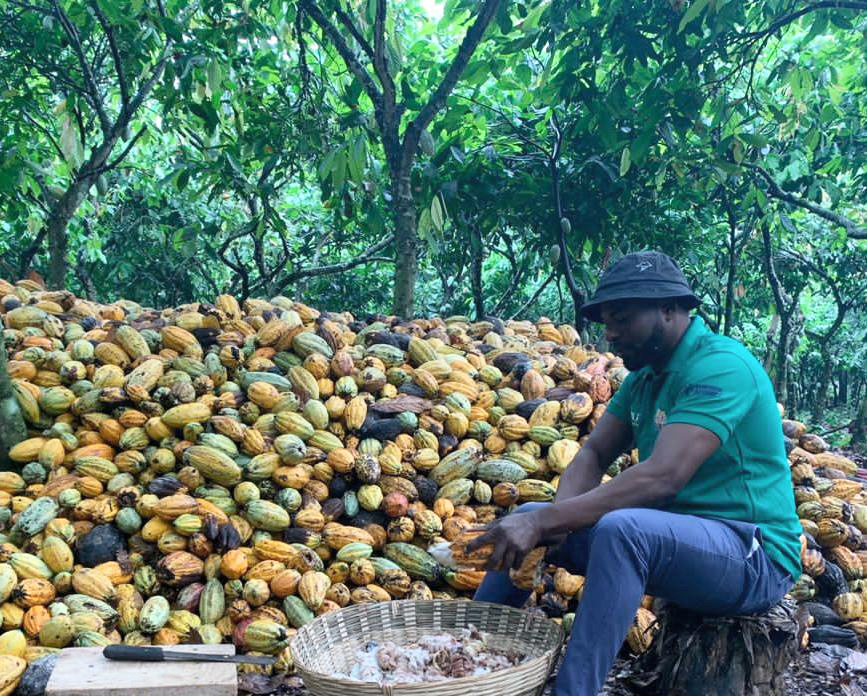
Another issue for farmers like Ismail is water. Chemicals like mercury and lead which are used to clean wood can often get into a farm’s water supply. “In some cases, the streams that we have in our farms have been polluted,” he says. “The problem for farmers now is they have to transport water from their house to use on their farm. This is costly, as you have to have some kind of transportation.”
Meanwhile, the price cocoa farmers receive remains far below the true cost of production. “It makes it really difficult for farmers to stay in business,” he explains, “If we don’t restore the environment, there will be a time when we struggle to enjoy our bar of chocolate.”
In Europe the consequences are beginning to ripple across the industry, particularly among small-scale, independent businesses. Germany-based Pott Au Chocolat sources premium cocoa from agroforestry plantations in the Dominican Republic, and consequently pay higher prices for quality beans choosing to value flavour, fermentation, and farming integrity over volume.
Unlike West Africa’s monoculture plantations which are more vulnerable to climate disruption, agroforestry systems intersperse cocoa trees with other crops and vegetation, offering shade, biodiversity, and better resilience to environmental stress. But even these sustainable methods are feeling the pressure.
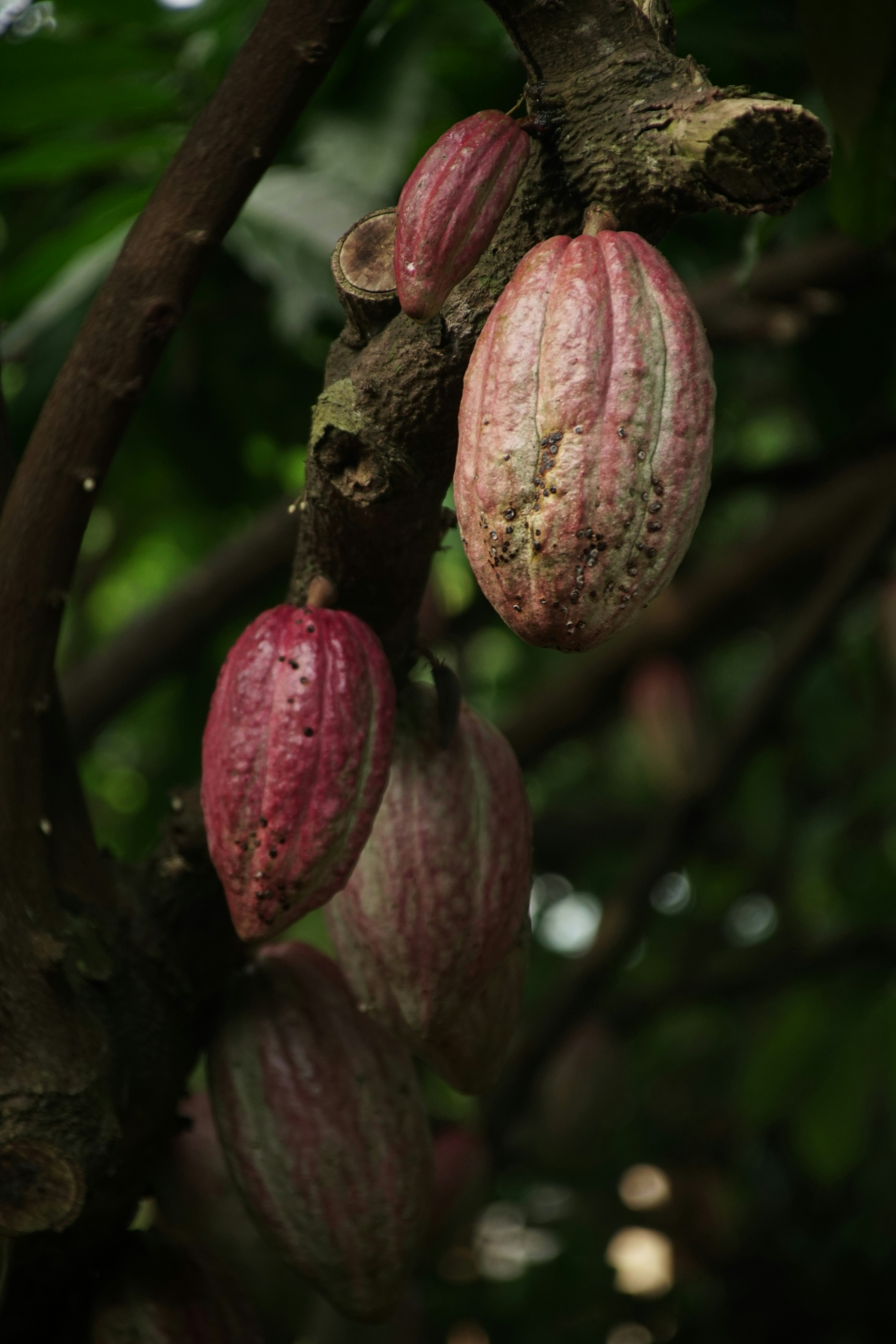
“Because bulk cocoa is currently being harvested less, the prices for quality cocoa have also risen in the short term,” Marie-Luise Langehenke from Pott Au Chocolat says. “But with a reasonable price, the cocoa farmers are able to see a perspective for themselves and not turn away from good cocoa cultivation.”
Independent chocolate businesses across Europe will have to wait and see if consumers are willing to pay the price for the difference in quality and flavour.
“We are currently paying much higher prices for high-quality nuts such as hazelnuts, pistachios and walnuts, where the price per kilo is higher than that of cocoa beans everywhere,” Langehenke adds . “We should simply ask ourselves first what is worth what to us. Unfortunately, food is undervalued at the moment and should be given a much higher priority.”
Ismail and the CAA have been proactive in promoting agroforestry as a mitigation strategy in Ghana. “We’re pushing farmers to grow more [varied] trees. We supply them free of charge and insist they’re planted and registered.”
The CAA has embraced Integrated Pest Management (IPM), a system that prioritises physical pest control and environmental monitoring over chemical use.
“Chemical application is the last resort,” Ismail explains. “We teach farmers to prune, observe and identify problems early.” The CAA also restricts farmers’ access to forests, which all have to be mapped as part of a Rainforest Alliance compliance requirement.
In Europe, chocolate brands are becoming more discerning about where their beans come from and under what conditions. Certifications like Rainforest Alliance, Fairtrade, and organic labels now serve as much to reassure buyers about environmental integrity as they do about social justice.
If trends continue, availability of cocoa could shrink dramatically, and chocolate as we know it may become a rare and expensive indulgence.