
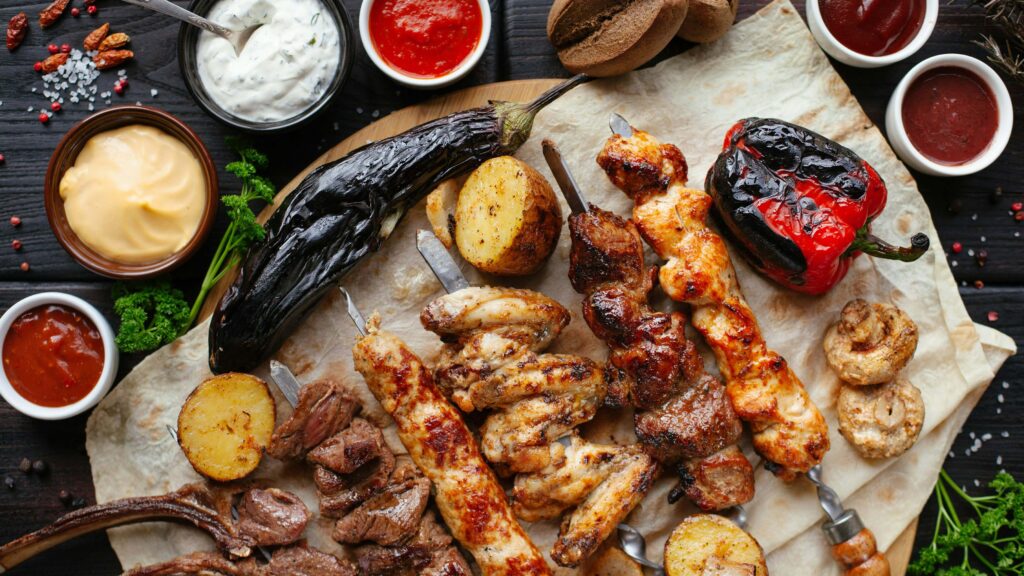
The year is 2050, and in England, it’s barbecue season. The host stands behind a sleek electric grill, flipping burgers on an induction plate rather than an open flame. At first glance, the scene looks familiar: sizzling patties and skewers of colourful vegetables. But on further inspection, this barbecue is not one we are accustomed to.
Food production in 2025 already accounts for around a third of human-caused greenhouse gas emissions. By 2050, the global population is expected to surpass nine billion, and demand for food to rise by 70%. A transformation of our food system is essential to curb global heating.
There are several pressing agendas, says Andrea Zick, a doctoral researcher in food sustainability at Brunel University. Food of the future must be low emissions, use land efficiently, avoid deforestation, and reconsider water usage to avoid drought.
Plant-based… it hits so many of the agenda points we are working towards
Andrea Zick, food sustainability researcher
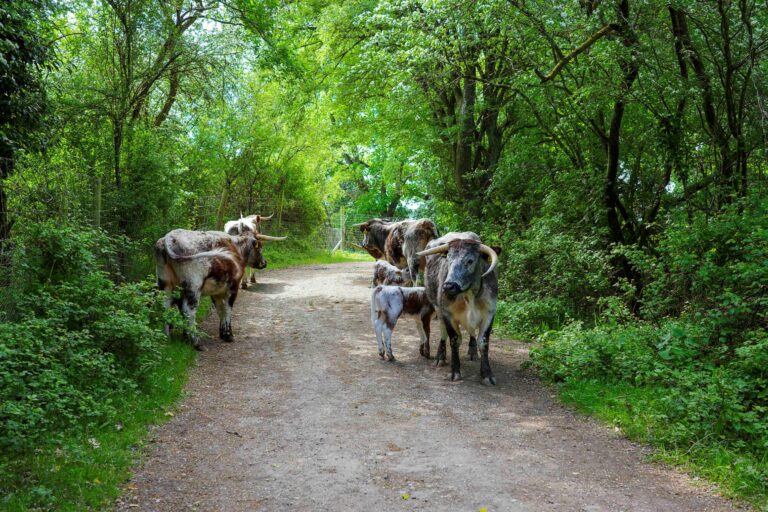
The greatest challenge for our future barbecues will be what to put at the centre of the plate. Despite providing less than a fifth of the world’s food, animal agriculture is responsible for 70 per cent of agricultural water use, 50 per cent of land use and around 14.5 per cent of global greenhouse gas emissions.
“I would like a barbecue in 2050 to be predominantly plant-based,” says Zick. “It hits so many of the agenda points we are working towards.”
If traditional beef burgers and pork sausages are out, we might look first to meat substitutes. The most promising, arguably, is mycoprotein: textured, nutrient-rich fungi produced by tall fermenters like those in a beer brewery. The result is dense, filling, and satisfyingly savoury.
But in recent years, sales of plant-based meat substitutes have slowed – even falling according to some metrics. Analysis attributes this trend to a combination of higher costs and health concerns over ultra-processed ingredients.
Zick believes the “texture challenge” – the difficulty of emulating the juiciness and mouthfeel of actual meat – also puts meat-eaters off these products. But she’s confident this can be solved with time.
An alternative centrepiece for our barbecue could be cultivated meat. Sometimes dubbed “lab-grown” meat, it’s real animal protein grown from cells in steel bioreactors, without the need to raise or kill animals.
“We’ll still see familiar favourites like burgers, sausages … but the way they’re made will be very different,” says Riley Jackson of Ivy Farm Technologies, a UK-based cultivated meat startup.
While cultivated meat promises the closest match to traditional meat, scaling up the technology presents challenges. Growing animal cells requires advanced equipment, specialised nutrients, and constant energy – not yet a low-carbon process.
By 2050, our salad bowl will likely have changed too. Roughly half of the vegetables sold in the UK today are imported, and a move towards local, seasonal produce could slash transport emissions and bolster food security. Think more asparagus, fewer avocados.
Hotter, drier summers will also affect the types of vegetables we grow. Chickpeas and sweetcorn, typically imported from warmer countries, could be grown domestically, alongside heat-resistant tomatoes.
Other sides may be less familiar. Insects, common in many non-Western diets, may become mainstream, offering high protein with minimal land use. Grown in vertical farms and fed on food waste, crickets and mealworms could be processed into flours and mixed into breads and crackers.
Even our drinks may reflect new attitudes. “Beer can lead the way, showing that circular approaches don’t mean compromise”, says Kristen Fuller of Toast Brewing. The London-based company uses surplus bread, almost half of which is wasted, to replace a quarter of the barley in their beers. Fuller hopes the approach can become ubiquitous across the brewing sector.
Hotter climates are also shifting normal processes of wine making. As temperatures rise, southern England’s vineyards, once outcrops for niche, sparkling wines, are already producing high-quality grape varieties such as pinot noir and chardonnay. By 2050, British wine could be a major force.
Our future barbecue may have a different menu, but the core ingredients remain the same: good food, laughter, and a cold drink in hand. By 2050, we can still have moments like this, if we choose to embrace change. But to preserve its key components, we may need to remain open-minded about what goes on our plates.