
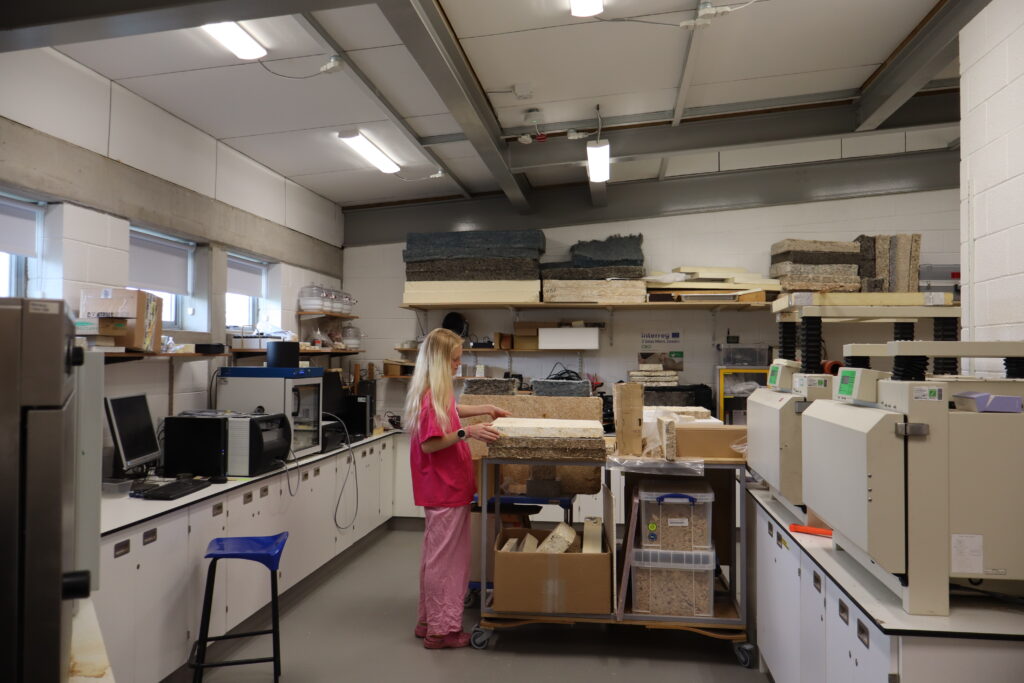
“When you think of fungi in your home, you probably immediately just think about mould,” says Joni Wildman, a PhD student at the University of Bath leading research into fungi-based building materials. But while she cultivates her specimens on the microwavable packets of rice you might use in your kitchen, Wildman explains that “the fungi we’re using to make these composites are very different from the mould fungi.”
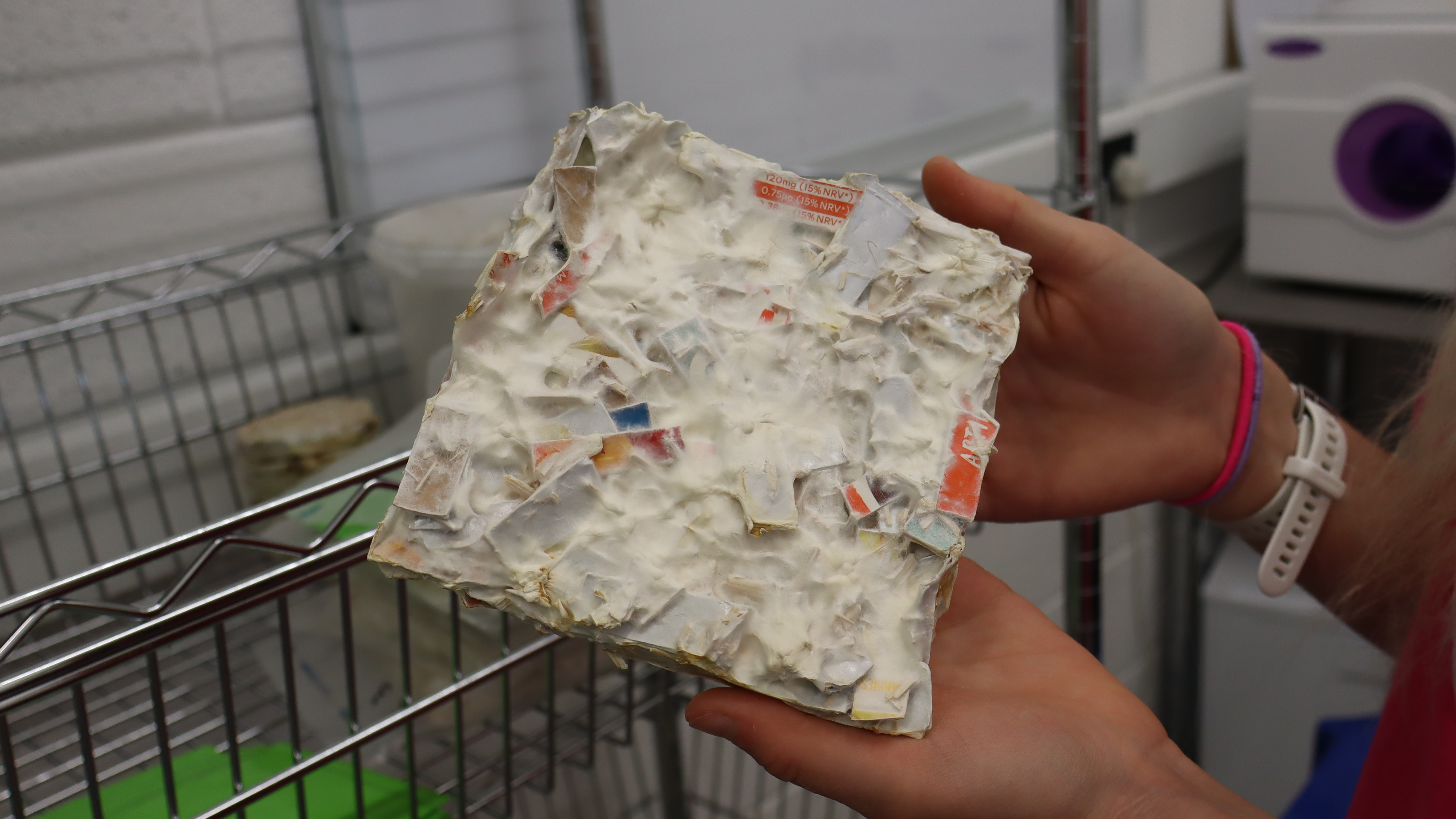
Wildman’s supervisor is Daniel Henk, professor of mycology – the study of fungi – at Bath. As the fungus digests the material, “they fuse together into making it a big piece of mycelium, a sticky mass of completely interlinked filaments,” Henk explains.
In nature, mycelium is the part of the fungus that is hidden under the soil, unlike mushrooms which are the fruiting bodies. Henk likens this to their new role insulating buildings, “hidden away inside of walls and hopefully never thought about once they’re installed”.
“We never actually let them make mushrooms, so they’re probably very disappointed,” he jokes.
A 2023 UN report stated that the building sector is the largest emitter of greenhouse gases, globally responsible for 37 per cent of emissions. These emissions include the production and transportation of traditional insulation materials, like plastic-based expanded polystyrene. Even though they are effective, Wildman explains they require a lot of energy to manufacture and can take thousands of years to degrade.
But without this insulation, excess energy is spent cooling buildings in summer and heating them in winter.
In the UK, homes lose heat up to three times faster than other European countries, making them some of the least energy-efficient on the continent, according to a 2020 study by the smart home company Tado°.
Wildman hopes that fungi-based insulation materials will become a realistic alternative. Since they are fire-resistant and biodegradable, she says they could find a particular niche in temporary structures like acoustic wall panels.
The materials are already being tested in four buildings across Europe, in partnership with the EU-funded project INBUILT and the insulation company Mykor.
Back in Wildman’s lab, the process also makes use of recycling: the mycelia fuse together on materials that would otherwise be landfill, such as wood from construction or agricultural waste.
These are often difficult to dispose of and some have “a load of nasty chemicals,” Wildman says, but they make an ideal substrate for fungi, constituting the material that they eat and eventually colonise. “They kind of eat everything.”
Easy to grow, robust, and super cheap
Daniel Henk
Once the fungus colonises these materials, the researchers dry the filaments and the specimen dies, stopping its growth. Wildman says these processes can each take a week or two. Several species of mushroom fungi can be used, as long as they are “easy to grow, robust, and super cheap”, Henk says, aligning with their efficiency goals.
“One of the cool things Wildman has looked at is that there is a mushroom for every environment,” he adds. Fungi are found worldwide, and different species can grow in environments from rainforests to deserts.
That means mycelium-based materials can be grown even in the face of global heating.
The materials can also be engineered in a way that traditional ones cannot. “They’re made with a living thing,” explains Wildman, “so there could be ways to make them more mould resistant without having to apply nasty chemicals.”
One challenge is encouraging the adoption of these sustainable alternatives, says Wildman. “The traditional materials are cheap, easy to make,” she says. “People are kind of used to them [whereas] people don’t know anything about mushrooms or fungi, and the things they know are the mouldy stuff in the shower.”
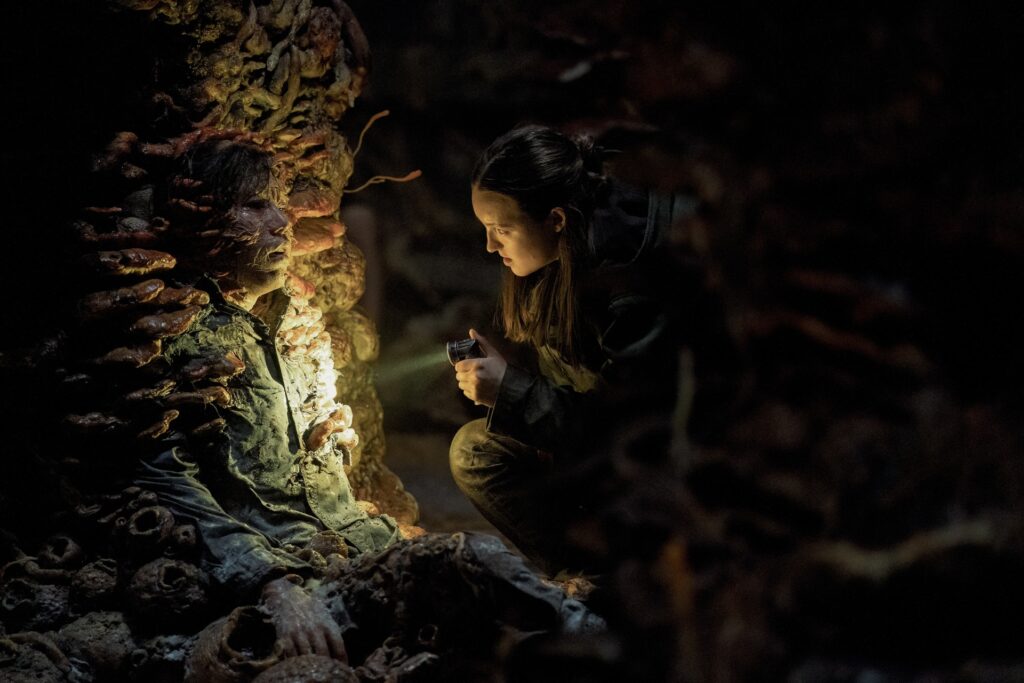
Surprisingly, even blockbusters like the HBO adaptation of The Last of Us video game, where a cordyceps fungus causes a zombie outbreak, can widen acceptance. “When the TV series came out, people were much more interested in the research,” Henk acknowledges with a smile. “The more people pay attention, the more we can get done.”