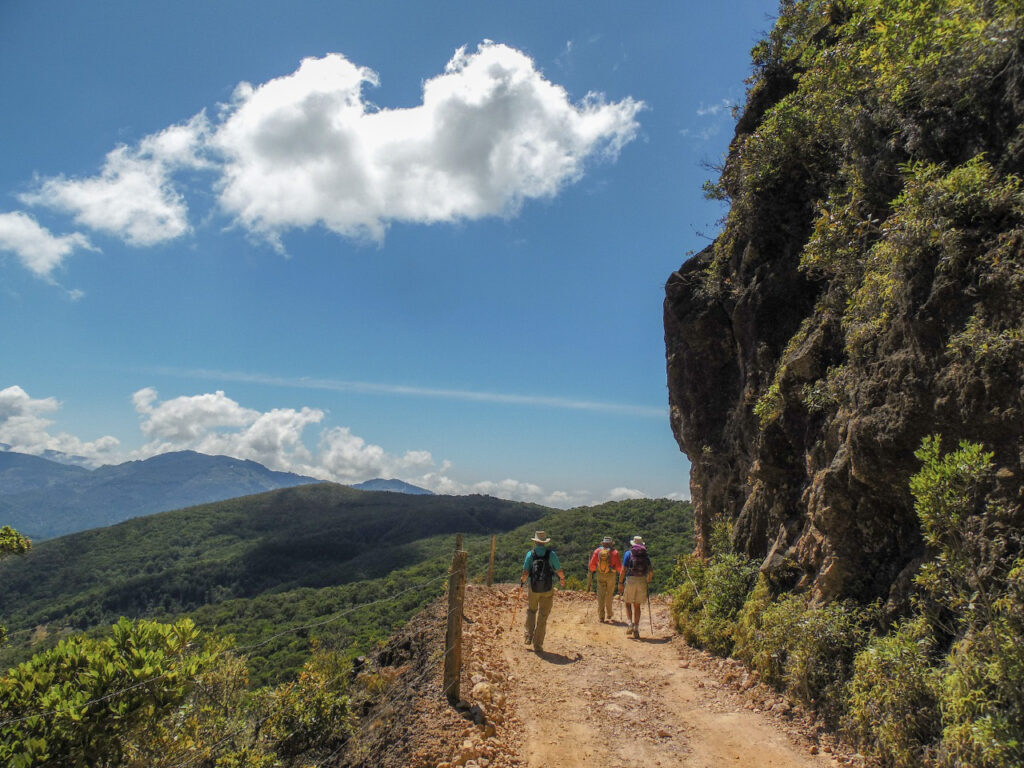
Walkers on the Camino de Costa Rica | Image: Mar a Mar Association
Travelling on foot, with only the essentials strapped to your back, the world can shrink to just the crunch of gravel underfoot and the trail ahead of you. It can be the purest form of travel.
Unless your path is strewn with dirty tissues and overflowing litter bins, which is what volunteers at the Confraternity of St James recall during their Camino de Santiago trips.
The Camino de Santiago was once a medieval Christian pilgrimage to the shrine of St James the Apostle in Santiago de Compostela.
Today, it is a well-established walking route, marked by its signature blue and yellow signposting and network of pilgrim hostels called albergues.
The number of pilgrims walking the Camino de Santiago continues to reach record annual highs. Almost 500,000 completion certificates, known as Compostelas, were awarded in 2024, compared to just 643 twenty years ago.
Some people say that the Francés is the most authentic pilgrimage. But for me, it’s not authentic at all.
Karolein Vloeberghs, Camino de Santiago pilgrim
While there are route options from Spain, Portugal, and England, most pilgrims travel on the Camino Francés path. The nearly 500 mile long journey starts from St-Jean-Pied-De-Port in France and can take between a month and 40 days to complete.
“It’s very, very touristy”, says seasoned Camino de Santiago pilgrim Karolein Vloeberghs when talking about the Francés route during high season.
“Some people say that the Francés is the most authentic pilgrimage,” she continues. “But for me, it’s not authentic at all.”
The term ‘camino’ has evolved beyond its religious roots. Many long-distance trails are now known as caminos, even if they hold little or no spiritual significance.
Consequently, even something as pared back as walking a camino can be impacted by overcommercialisation and overtourism.
For the volunteers at the Confraternity of St James, the final 72 miles of the Francés route came as a particular “shock”.
Much of the strain of increased foot traffic is concentrated on this stretch, as the rules stipulate you must travel 62 miles on foot to receive your certificate. This makes the concluding stages particularly populated and noisy with both tourists and local schoolchildren who are encouraged to complete it for their CVs, much like the Duke of Edinburgh scheme in the UK.
In an effort to avoid the pitfalls of overtourism, other regions are exploring alternative models for more sustainable trail systems. One such example is the Camino de Costa Rica.
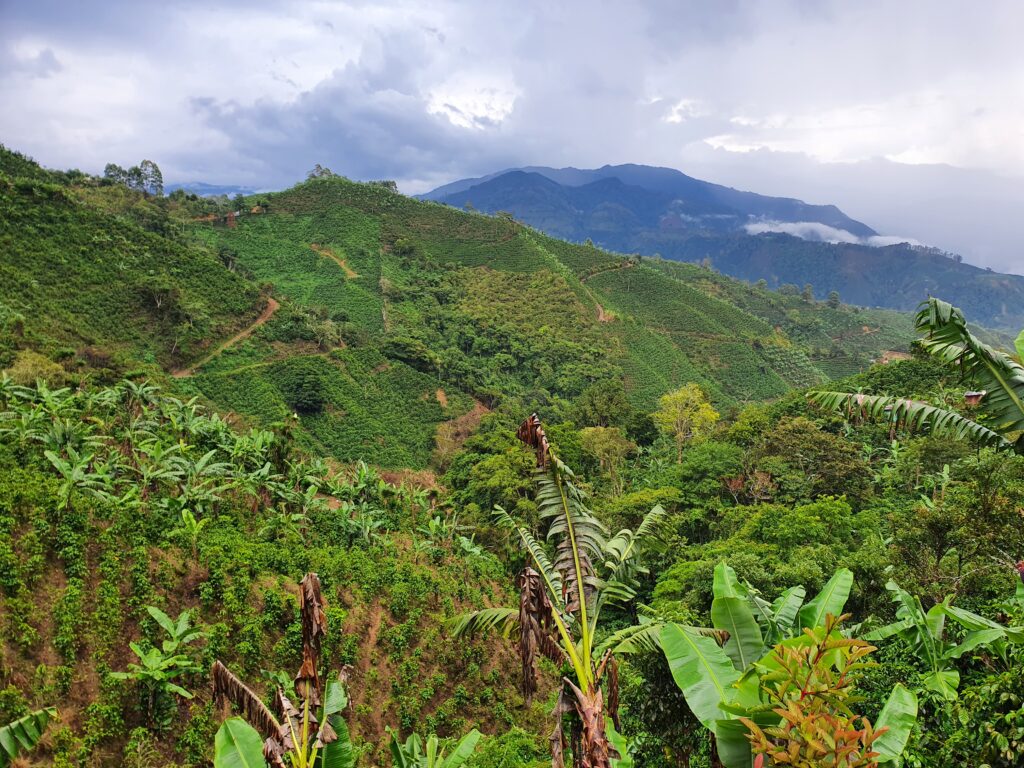
View from the Camino de Costa Rica | Image: Mar a Mar Association
After hiking a stretch of the Camino de Santiago, one of the creators of the Camino de Costa Rica, Conchita Espino, was inspired to create a similar long-distance route that would guide tourists through lesser-visited parts of Costa Rica.
Following nearly three years of research and exploratory hikes, the 173 mile Camino de Costa Rica was officially established in 2018 by the Mar a Mar Association, a non-profit dedicated to promoting sustainable tourism.
Chris Laganos, Camino de Costa Rica route director, describes it as a “wilderness trail experience”. The path follows back roads and forests that stretch from the Atlantic to the Pacific Ocean, connecting small communities along the way.
Financed by a community fund, the trail supports local conservation and education projects within these communities.
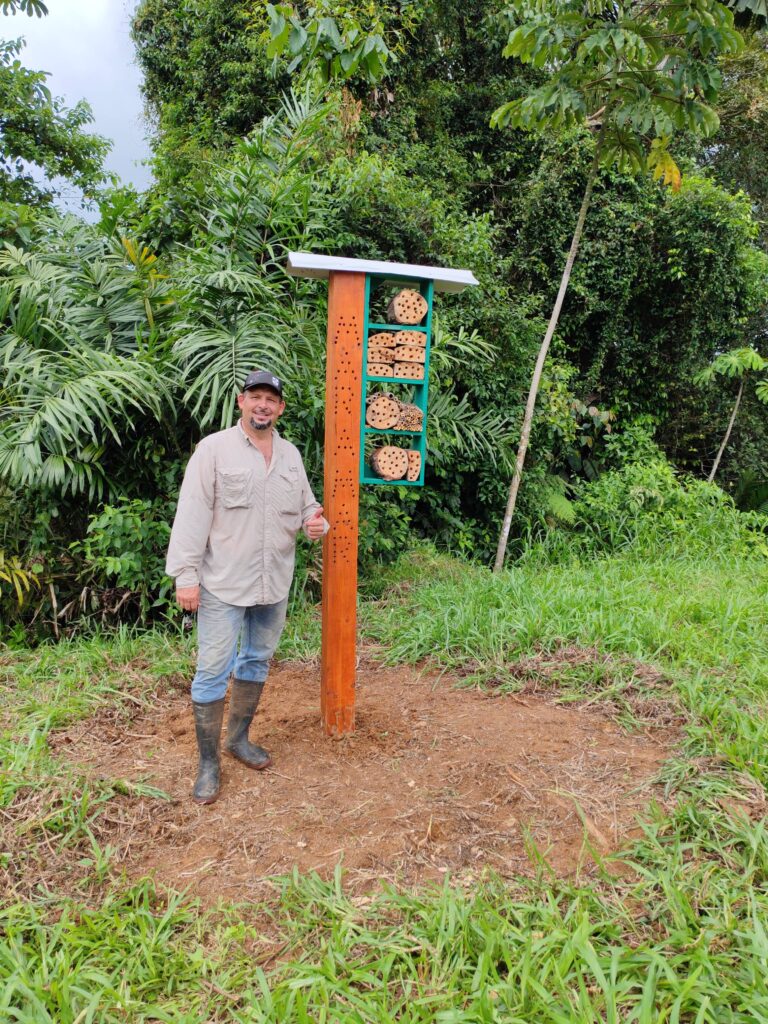
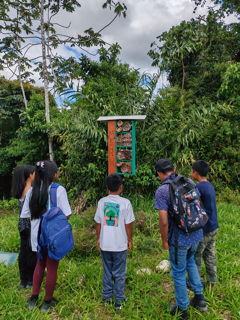
One of these projects looks at creating spaces for stingless bees, a native species to the tropics.
In just one year, the project has gone from a single colony at a stage in Navarro del Muñeco, to active beehives maintained by locals across five out of the sixteen stages of the trail.
Luis Mauricio Penida and students with stingless beehives | Images: Mar a Mar Association
Mar a Mar is ambitious with their goals for the Camino de Costa Rica. They want to continue promoting a trail that shows off Costa Rica’s rich biodiversity whilst protecting it.
Despite this, the number of people walking it remains modest. According to Laganos, only 489 people completed the full route in 2024, which is less than 1 per cent of the pilgrims recorded on the Camino de Santiago in the same timeframe.
One key feature of the Camino de Costa Rica is its intimacy. Laganos recently finished the trail and saw only two groups of people across the 15 days he was there.
For now, however, he does see growth as a priority, emphasising that the more they can increase foot traffic the better.
“Now, of course, we want to keep an eye on overcrowding,” he adds, “but we’re so far from that.”
Everybody who walks makes an impact
Luis Mauricio Penida, Camino de Costa Rica tour operator
Still, this push for growth proposes the same challenges for the Camino de Costa Rica that now trouble parts of the Camino de Santiago.
“Do we have zero impact? No, there’s never zero impact,” says Laganos.
The fundamental eco-conscious practices across both Caminos remain the same, regardless of the numbers of walkers. People are encouraged to carry a plastic bag to collect their waste, support local businesses, and be mindful of others.
The numbers on the Camino de Santiago in May 2025 were nearly eight per cent higher than May 2024, continuing a trend that has defined the past two decades.
If the Camino de Costa Rica follows a similar path, it too may eventually face the same pressures from increased foot traffic as the Camino de Santiago.
“Everybody who walks makes an impact,” says Luis Mauricio Penida, a local tour operator for the Camino de Costa Rica and assistant leader of the stingless bee project.
For now, the environmental impact of the Camino de Costa Rica remains small. But as more walkers find their way to the trail, the challenge will be ensuring that growth continues to complement local ecosystems and communities – a test the route has truly yet to face.
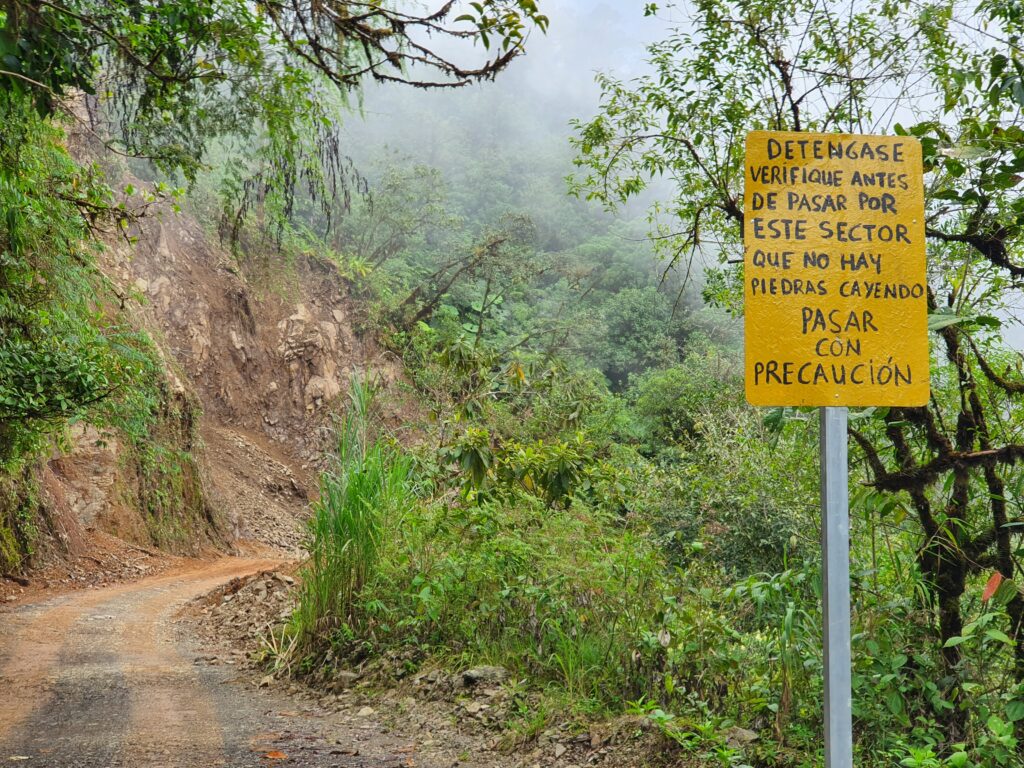
A hand-written warning sign on the Camino de Costa Rica | Image: Mar a Mar Association