
Liv Torc, 46, knew she wanted to be a poet from a young age, but remembers her dad being “really clear that was crazy”. “You’ll never make a living,” he told her. He was equally pessimistic about the future of the planet, as Torc outlines in her 2019 poem The Human Emergency:
“Dad, is the human race over? Is there still any hope?” He would lift his pipe to his toothless gums and say nope, And continue to smoke…
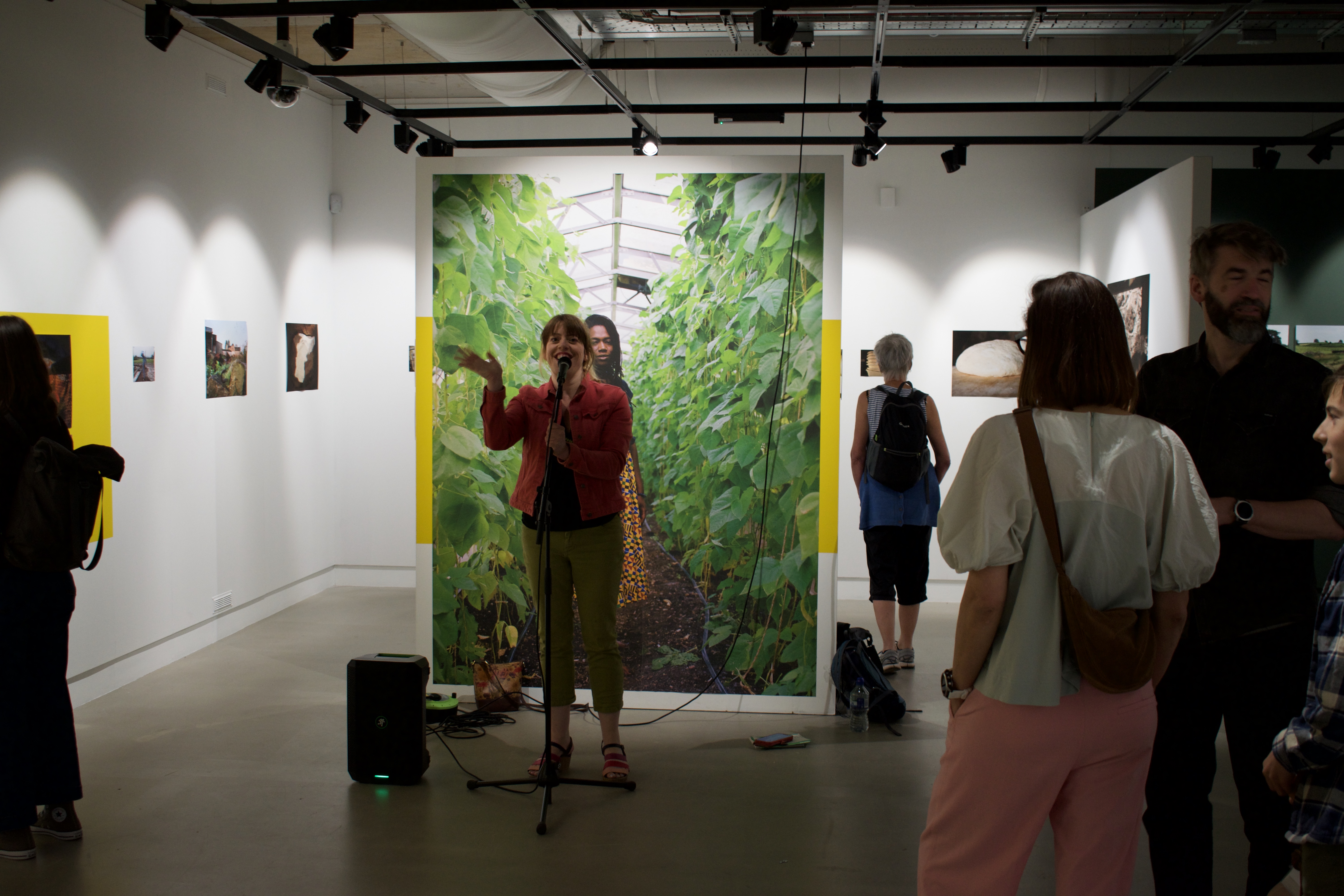
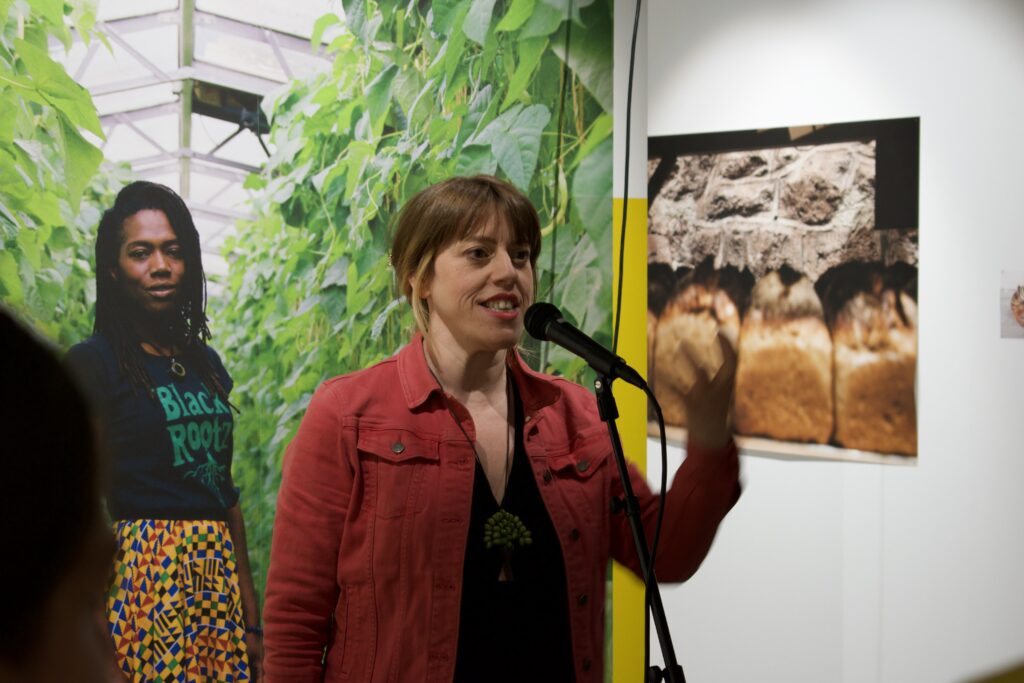
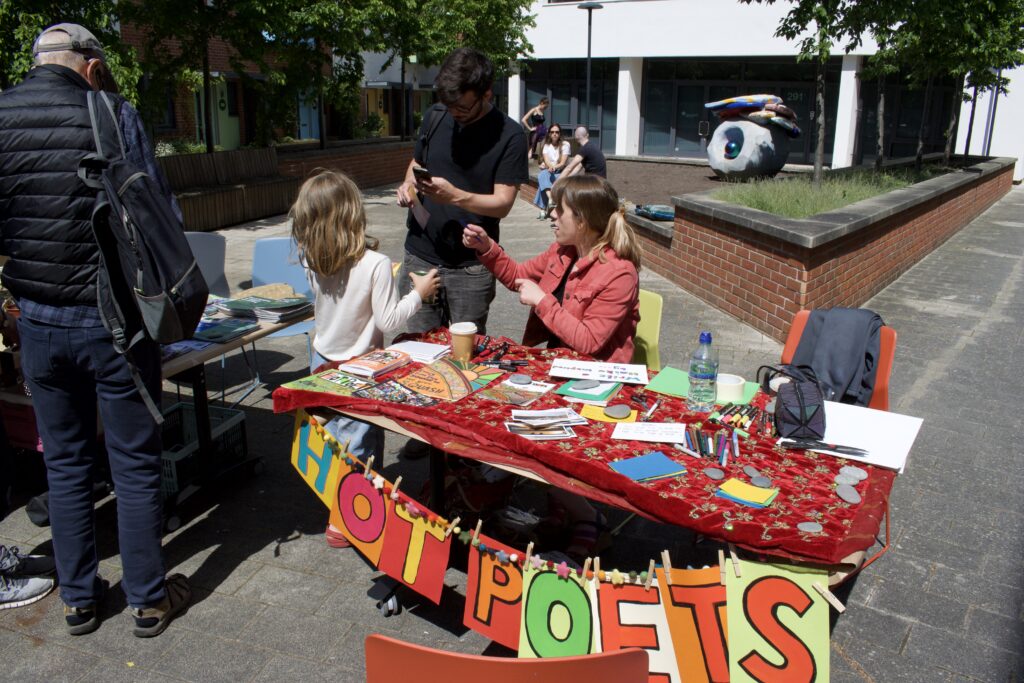
She seems on edge about being interviewed, teetering in the seat behind her stall. Torc’s is one of many at this We Feed The UK festival in Bristol, celebrating some of the UK’s best photography and poetry dedicated to the climate crisis. Torc explains that she is neurodivergent and still gets really nervous before performances. “I don’t really fit into the normal,” she says.
Yet Torc’s modesty belies the fact that the Hot Poets, a group she co-founded to communicate climate change science via spoken word poetry, has attracted international acclaim, including from the UN. Torc herself transforms into a powerful speaker onstage. Her calls to action and powerful gestures quickly fill the room with listeners. “The minute I get on, I’m somebody else,” she says.
Torc points to The Human Emergency as her first work to capture wider acclaim. In it, she expresses fear for her children and offers her response to climate change as a mother, and to her Dad’s pessimism:
…God may not exist, but I know there is something powerfully magic that weaves all our lives, that pokes us and loves us And wants us to evolve and survive.
The poem went viral, inspiring movements like the activist group Mothers Rise Up. Torc says spoken word has a natural ability to bring people together and “ignite the wow” – a personal motto referring to the sense of wonder she believes is latent in each of us.
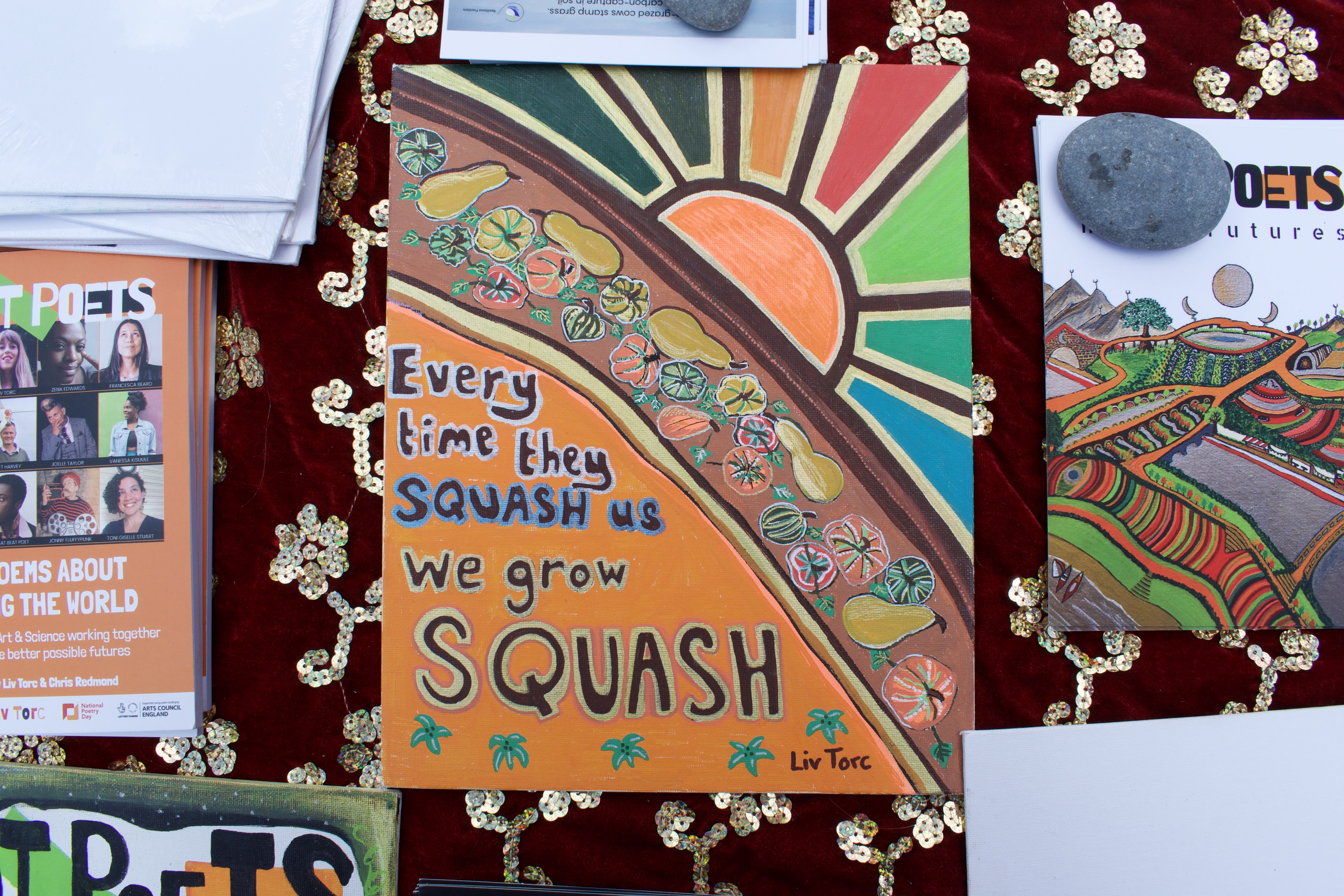
“When you’re an artist, you don’t have a choice [in what you do],” Torc says. With a cheeky grin, she mentions an art school project where she put pineapples in sunglasses and hats all over Dartington, in South East England, and got locals to write about them.
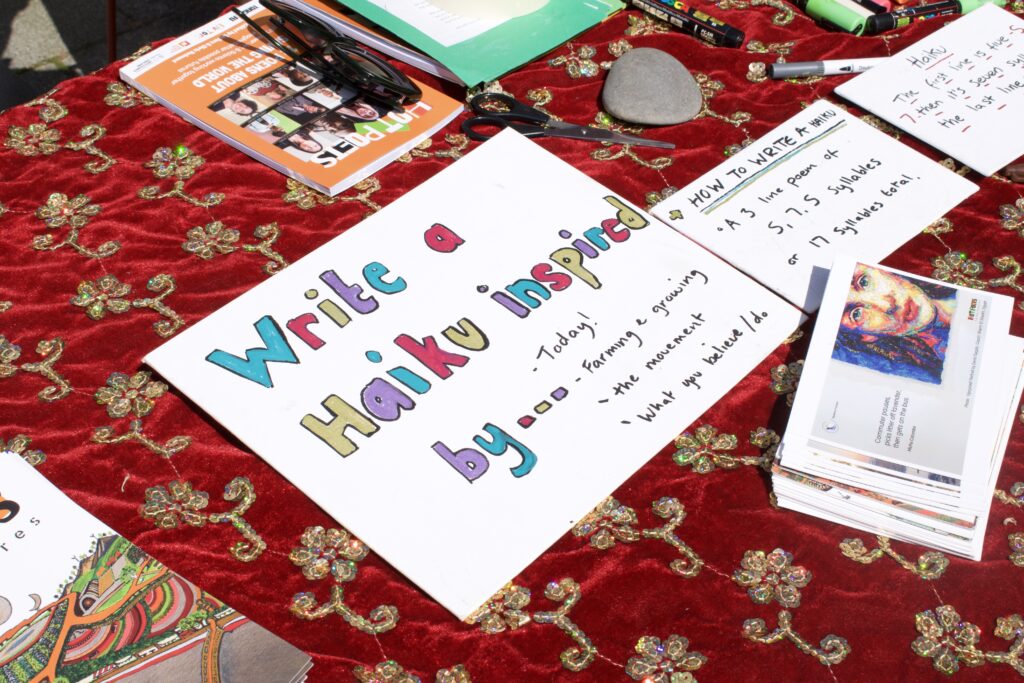
She once got a school of parents to write poems on bananas in their kids’ packed lunches, and started a viral haiku project during the pandemic, where she put together a weekly video montage of some of the thousands of three-line poems she had received from followers.
Yet there are two sides to Torc – one of a creative mind, and the other of a marketing strategist. She spent a decade as a media officer in the communications industry, learning to market projects. She tells stories in a way that invites community, something she attributes also to time spent among new-age druids, whom she describes as smart and interesting people who have learnt to live with nature and each other.
There’s so much more power we have to galvanise people, to move people.
Liv Torc
In 2022, Torc was chosen to be one of the UN’s 50 international thought leaders, working on poetry projects from Botswana to South Korea. “We need better stories,” she says, reflecting on her travels, “to share with more people all the great climate action we just don’t hear about.”
Dr Jocelyn Page, a consultant for Greenpeace’s Just Poetry initiative, says that “artivism” like Torc’s is on the rise because “it helps to illustrate and imagine possibilities that might not exist in other forms of activism.” Activism through art also reaches audiences otherwise put off by traditional forms of protest.
But Torc says she now wants to work more with the local communities “really experiencing” climate change. “It all matters,” she says, “whether you’re working with international people at COPs [UN Climate Change Conferences], or at a farm in Somerset.” The next stage is to train more Hot Poets and share their work in schools across the country.
Itching to go and write haikus with passersby, Torc recalls one more story before she heads out. She once watched a well-known poet at Glastonbury Festival perform about climate change and use the line “we’re dead and every part of me knows it.”
Her reaction? Not despair, but hope. “Maybe as artists we can do something different. There’s so much more detail and depth that we can get across. There’s so much more power we have to galvanise people, to move people.”